Day 1
TUM Asia Visit – Leadership & Urban Transformation Learning Experience
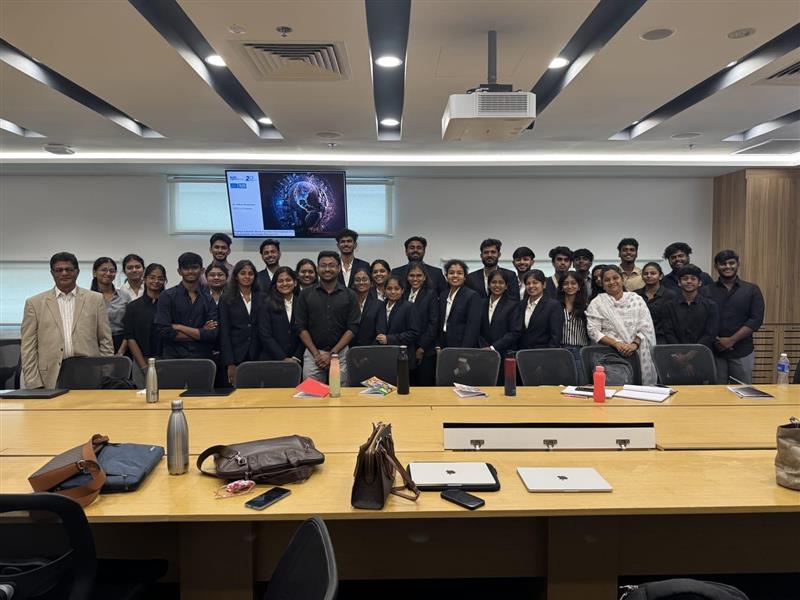
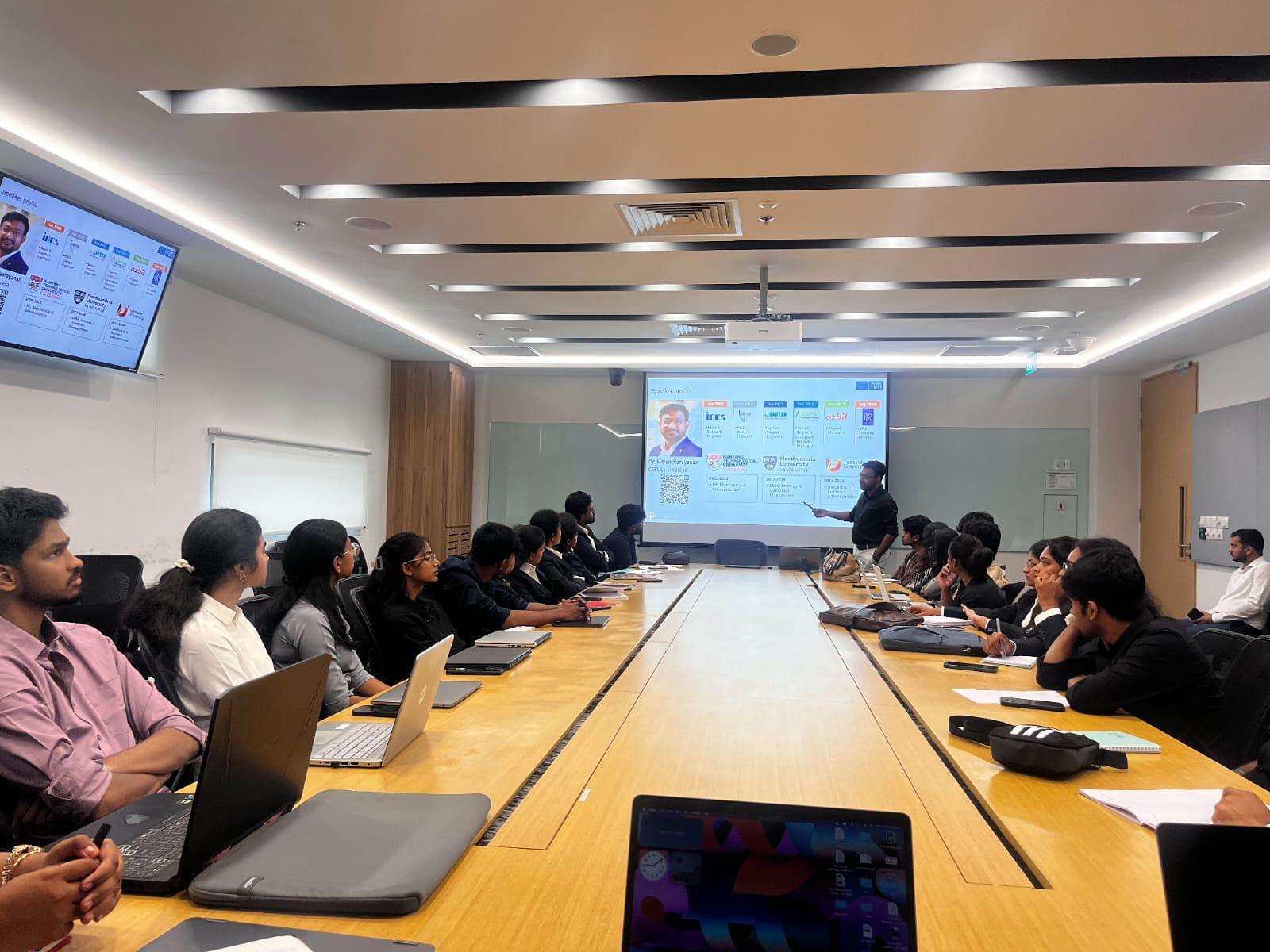
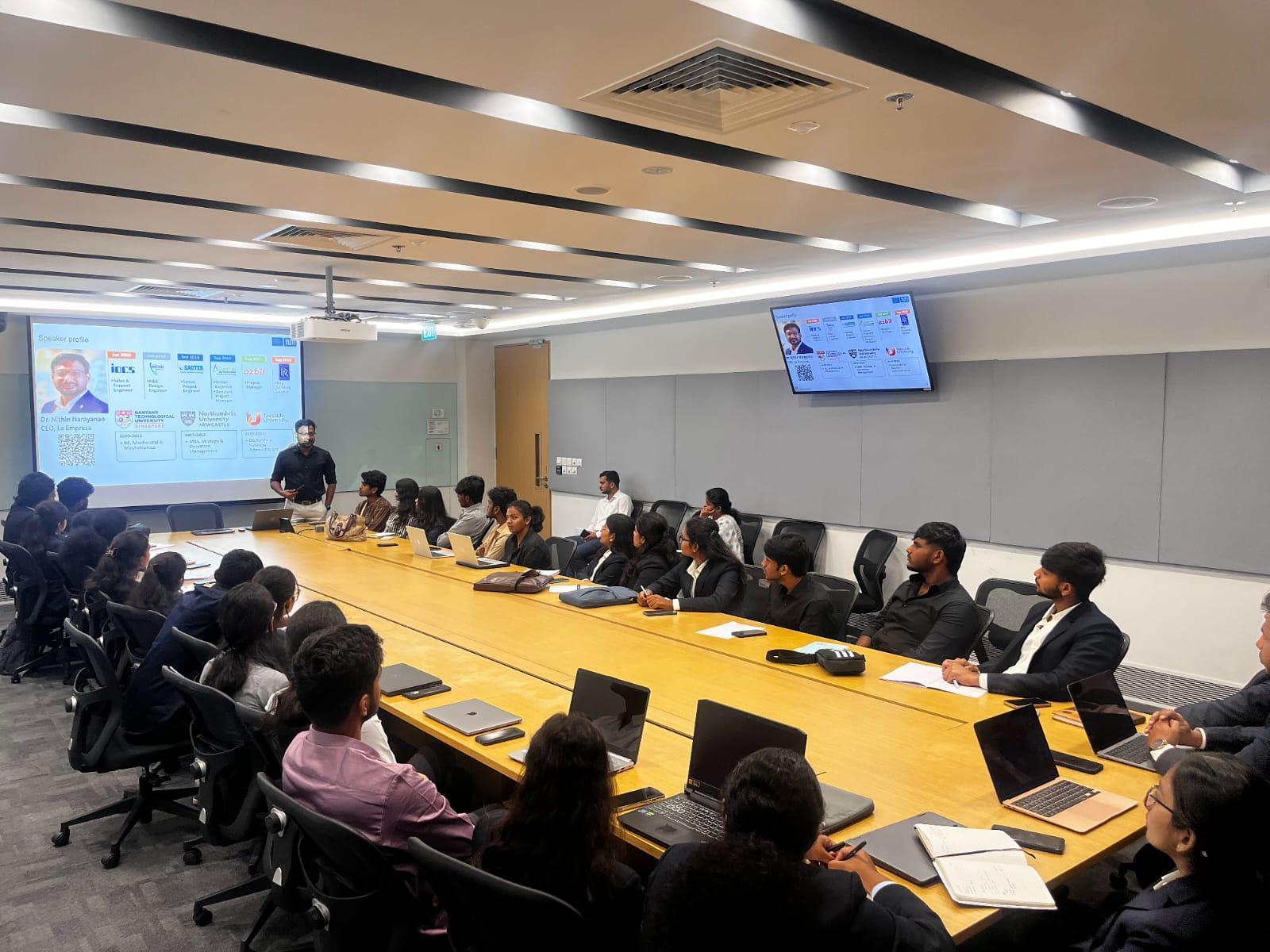
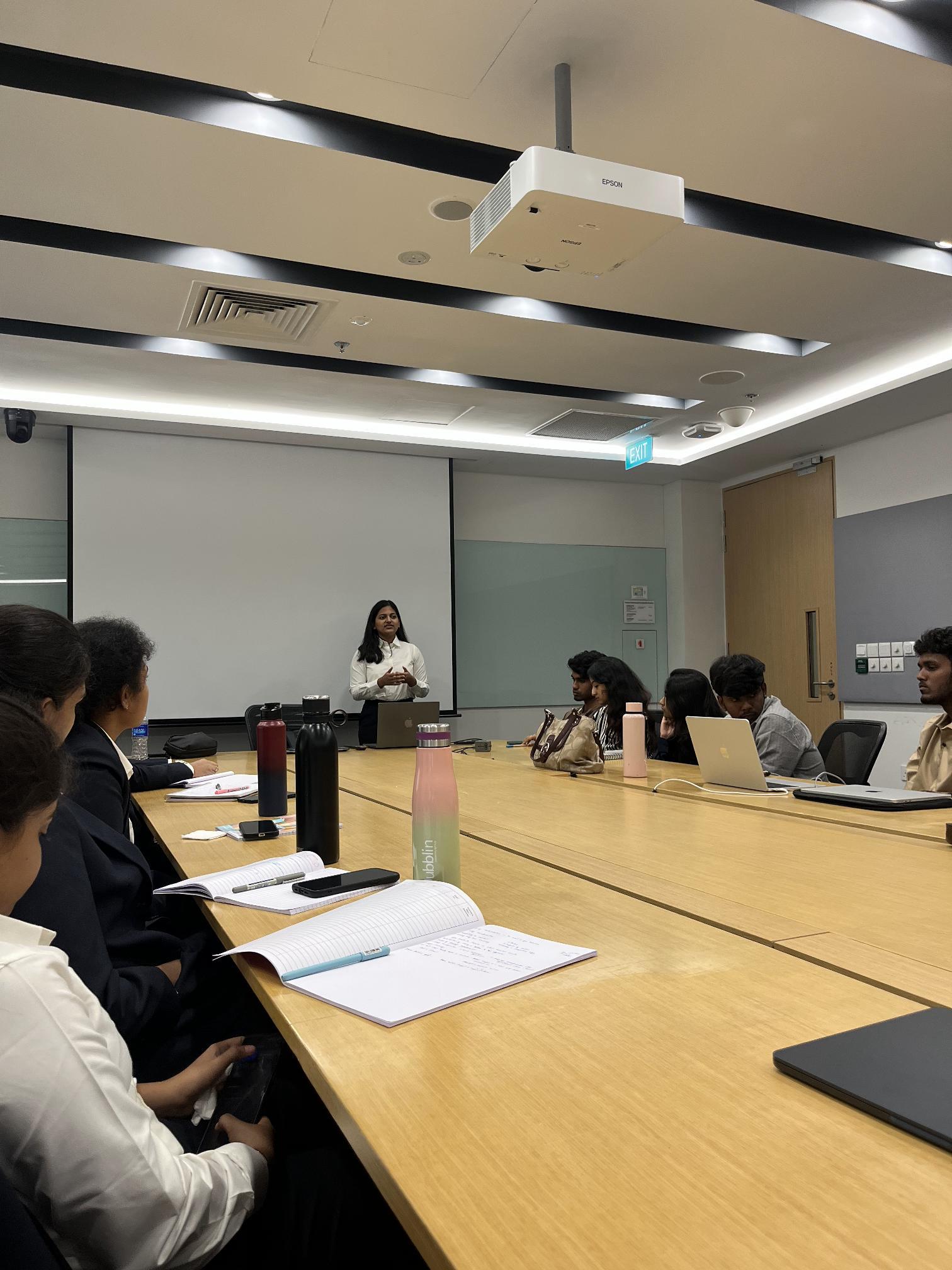
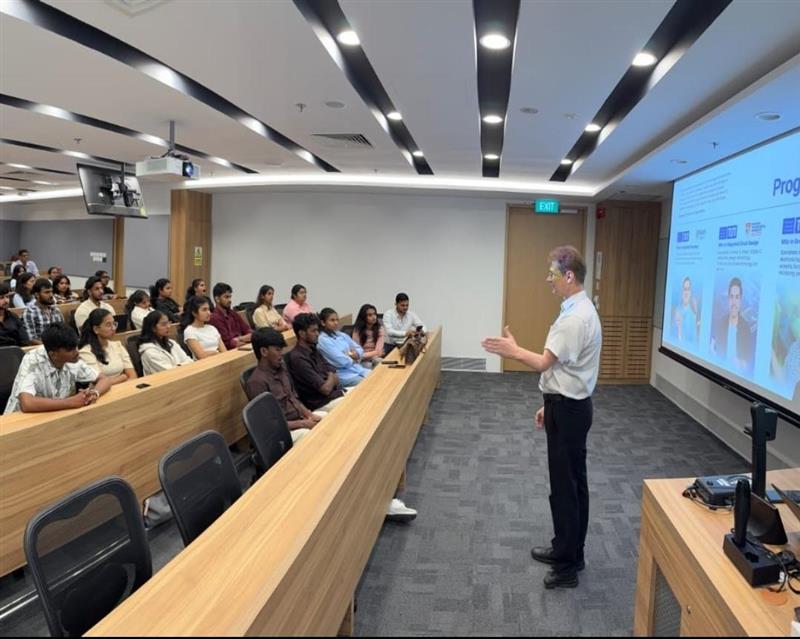
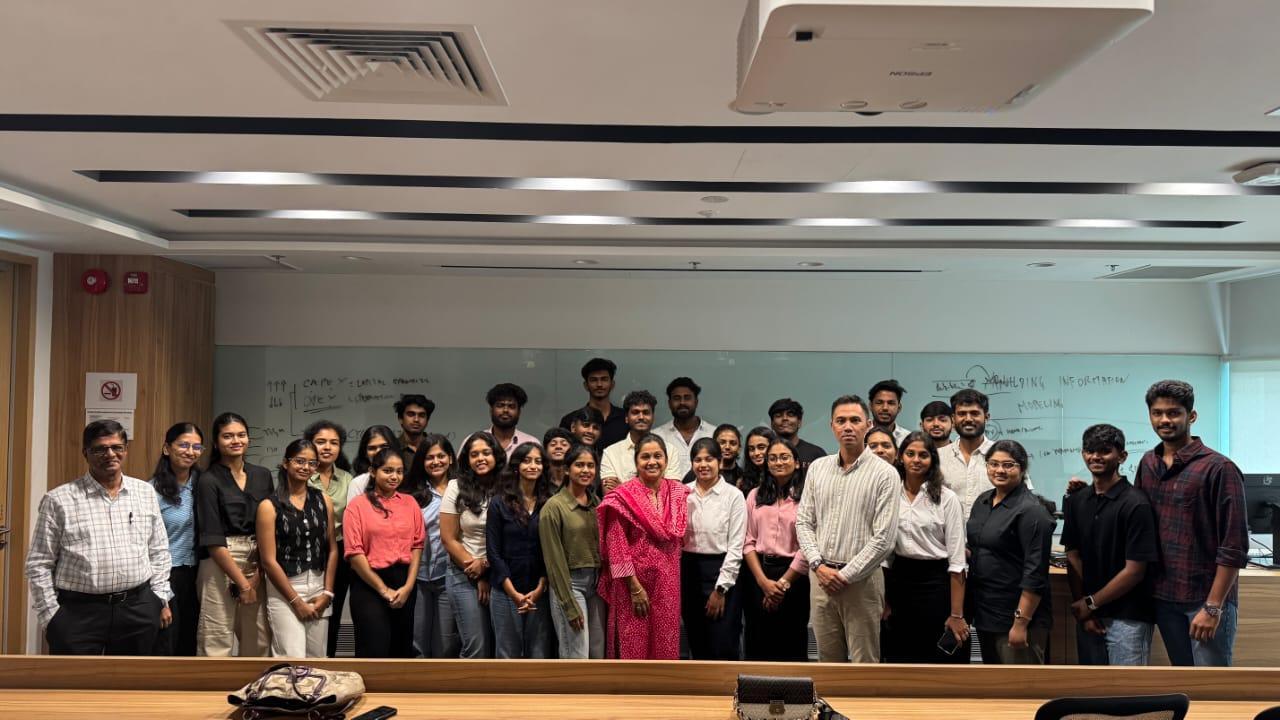
As part of the international learning initiative, students attended an engaging session at TUM Asia from 8:45 a.m. to 12:30 p.m., led by Dr. Nithin Narayanan on “Large Organization Transformation: Strategy, Structure, Culture, Systems, and People.”
The session offered deep insights into how large organizations evolve by aligning their strategy, structure, and culture. Drawing on case studies from global leaders such as Microsoft, Apple, Google, and Moller-Maersk, Dr. Nithin emphasized that transformation is a continuous journey of adapting, learning, and evolving. He also highlighted the importance of change management and how leaders can inspire teams to embrace transformation with confidence.
In the afternoon, students visited the Singapore Urban Redevelopment Authority (URA) Centre to understand Singapore’s remarkable journey toward becoming one of the world’s most sustainable and well-planned cities. They explored interactive models showcasing urban planning, infrastructure, green architecture, and smart city innovations that balance growth with sustainability.
The visit helped students appreciate how Singapore strategically manages its limited land resources while maintaining high standards of living for over six million residents.
Key Learnings
- Transformation is an ongoing process driven by people and culture.
- Change management is essential to motivate teams and seize new opportunities.
- Effective planning and innovation are vital for sustainable urban development.
Student Engagement
Students participated actively in discussions and activities, demonstrating curiosity and enthusiasm. Their creative problem-solving during the URA activity earned special recognition — one student even received a cash prize for exceptional performance.
Day 2
TUM Asia Session & Hyundai Motor Group Innovation Centre Visit – A Day of Learning and Innovation in Singapore
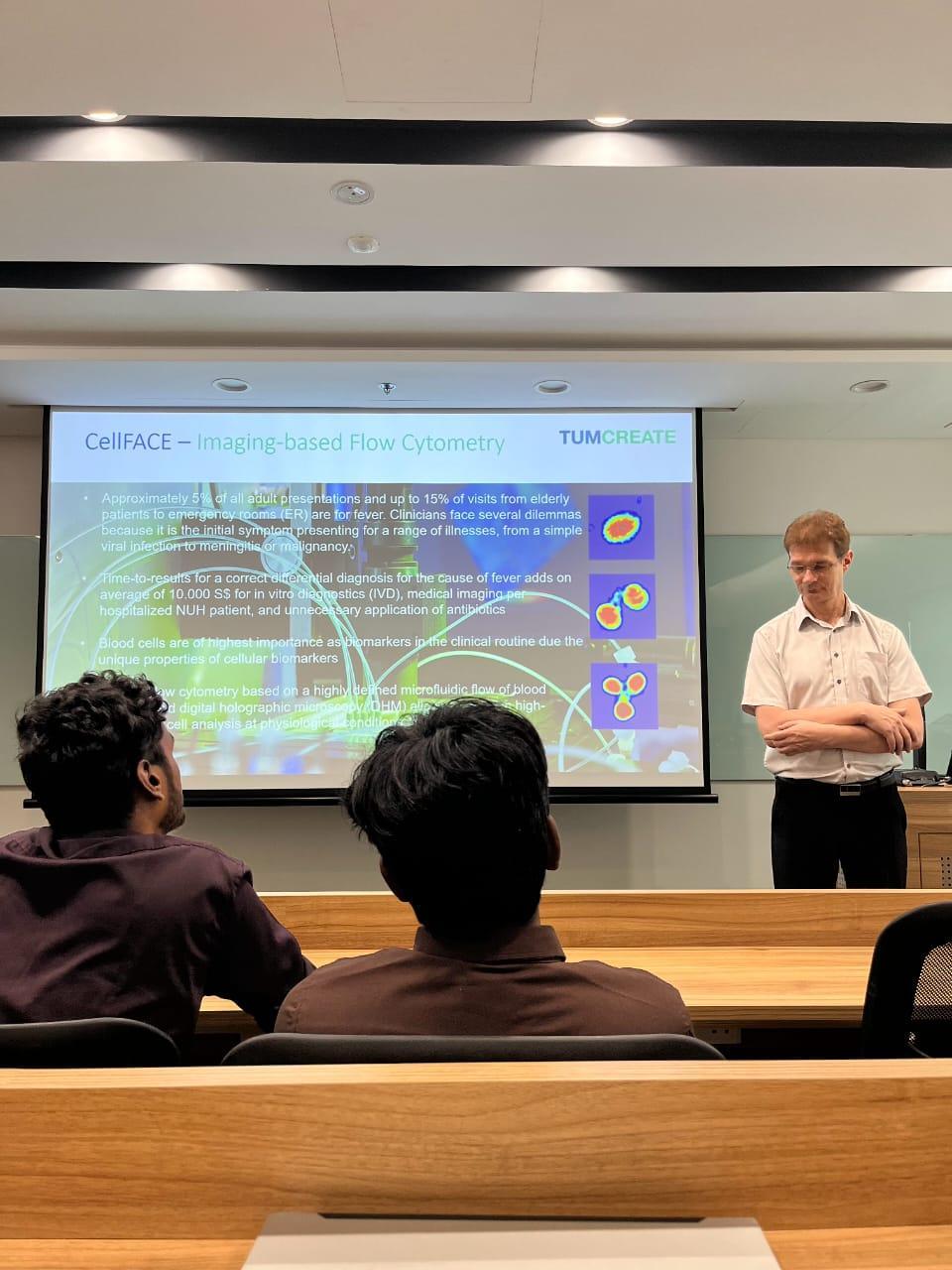
The day’s learning began with an engaging session at TUM Asia (8:45 a.m. to 12:30 p.m.) led by Dr. Andreas Rau, who explored how technology and sustainability are shaping the future of urban mobility. He introduced innovative concepts like Dynamic Autonomous Road Transit (DART) and Virtual Right of Way (VROW), showing how cities can reduce congestion and encourage the use of public transport. Dr. Rau emphasized the importance of smart mobility systems, circular economy practices, and the push-and-pull approach — discouraging car use while promoting eco-friendly travel options such as cycling and walking.
The session offered students valuable insights into how cities can become more sustainable, efficient, and livable through innovation and thoughtful planning.
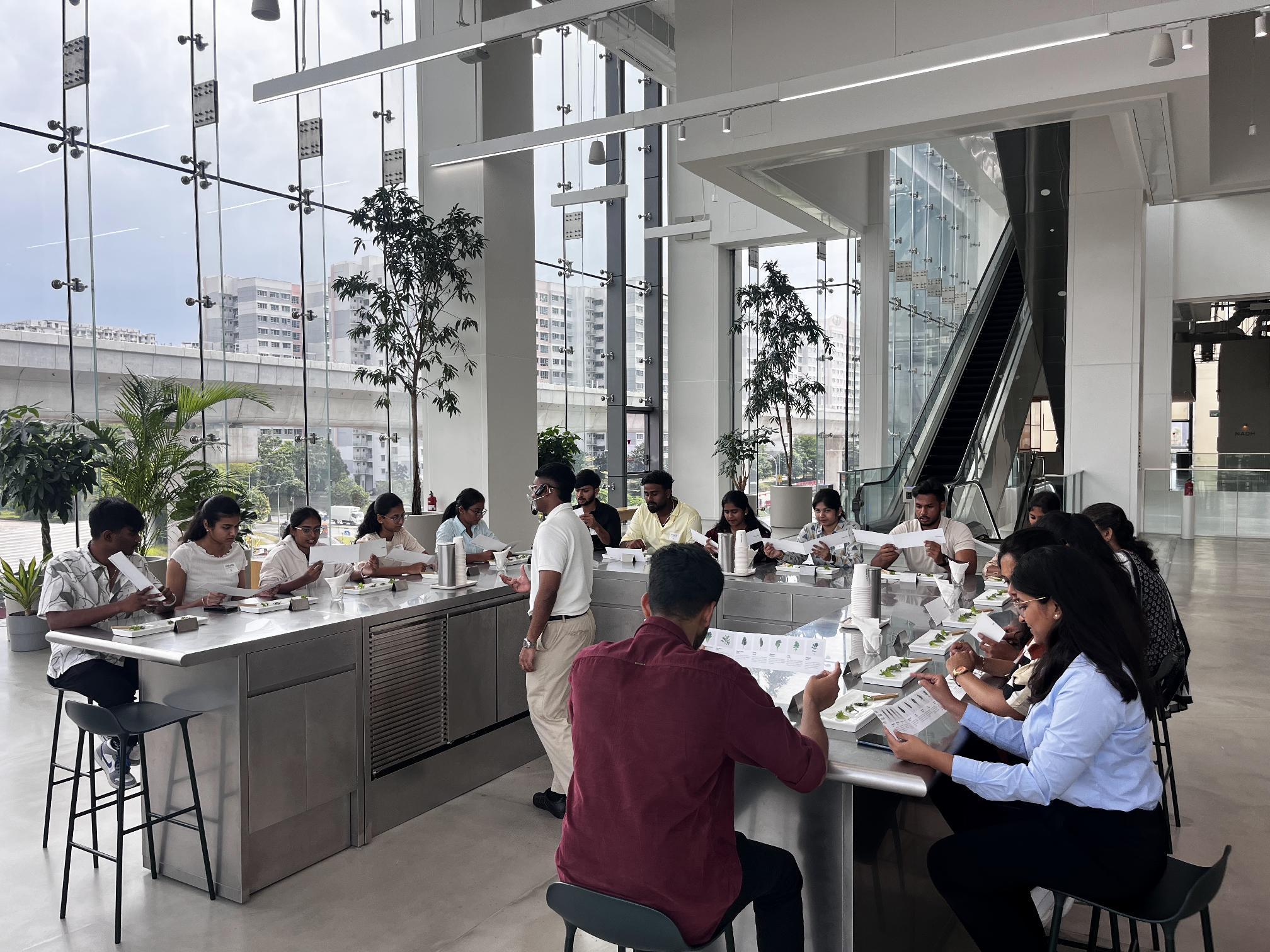
In the afternoon, students visited the Hyundai Motor Group Innovation Centre in Singapore (HMGICS), gaining a first-hand experience of how technology, creativity, and sustainability intersect. The visit included a guided tour of the artificial plantation area, where students harvested and tasted crops, learning about Singapore’s “30 by 30” vision to produce 30% of its food needs locally by 2030.
Students also enjoyed a virtual factory tour using AR glasses, observed robotic car assembly in action, and experienced a ride in Hyundai’s advanced autonomous vehicle — a thrilling glimpse into the future of mobility.
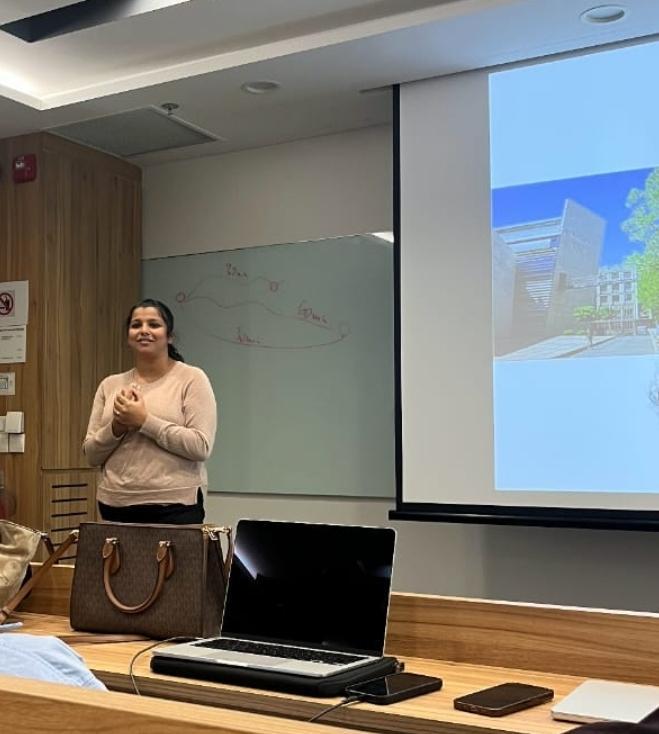
A special highlight was meeting Ms. Sudeekshana Vijayaraghavan, a KCT alumna from the Civil Engineering Department, now pursuing her Ph.D. at TUM under Dr. Andrew. Her journey inspired students to aspire for global excellence.
Key Learnings
- Smart mobility and sustainability go hand in hand in modern city planning.
- Reuse of resources and circular economy principles drive cleaner urban growth.
- Innovation and automation are transforming industries like automotive manufacturing.
- Global exposure helps students connect academic learning with real-world impact.
Student Engagement
Students were punctual, curious, and actively participated in both sessions. They adapted quickly to the schedule and engaged meaningfully in discussions and activities throughout the day.
Day 3
TUM Asia Sessions and Visit to the Sustainable Singapore Gallery – A Day of Learning, Innovation, and Sustainability
The third day of the international learning program at TUM Asia began with two insightful sessions that deepened students’ understanding of sustainable development and emerging technologies.
The first session by Dr. Ali Aryo Bawono explored the interconnection between transport, mobility, and land-use development in creating sustainable cities. He highlighted how circular economy principles and innovative business models can help cities reduce waste, enhance efficiency, and promote a low-carbon future. Practical examples such as modular and precast bendable concrete showcased how material innovation supports sustainability. Dr. Bawono emphasized that integrating smart mobility, renewable energy, and resilient infrastructure is key to achieving the UN Sustainable Development Goals (SDGs).
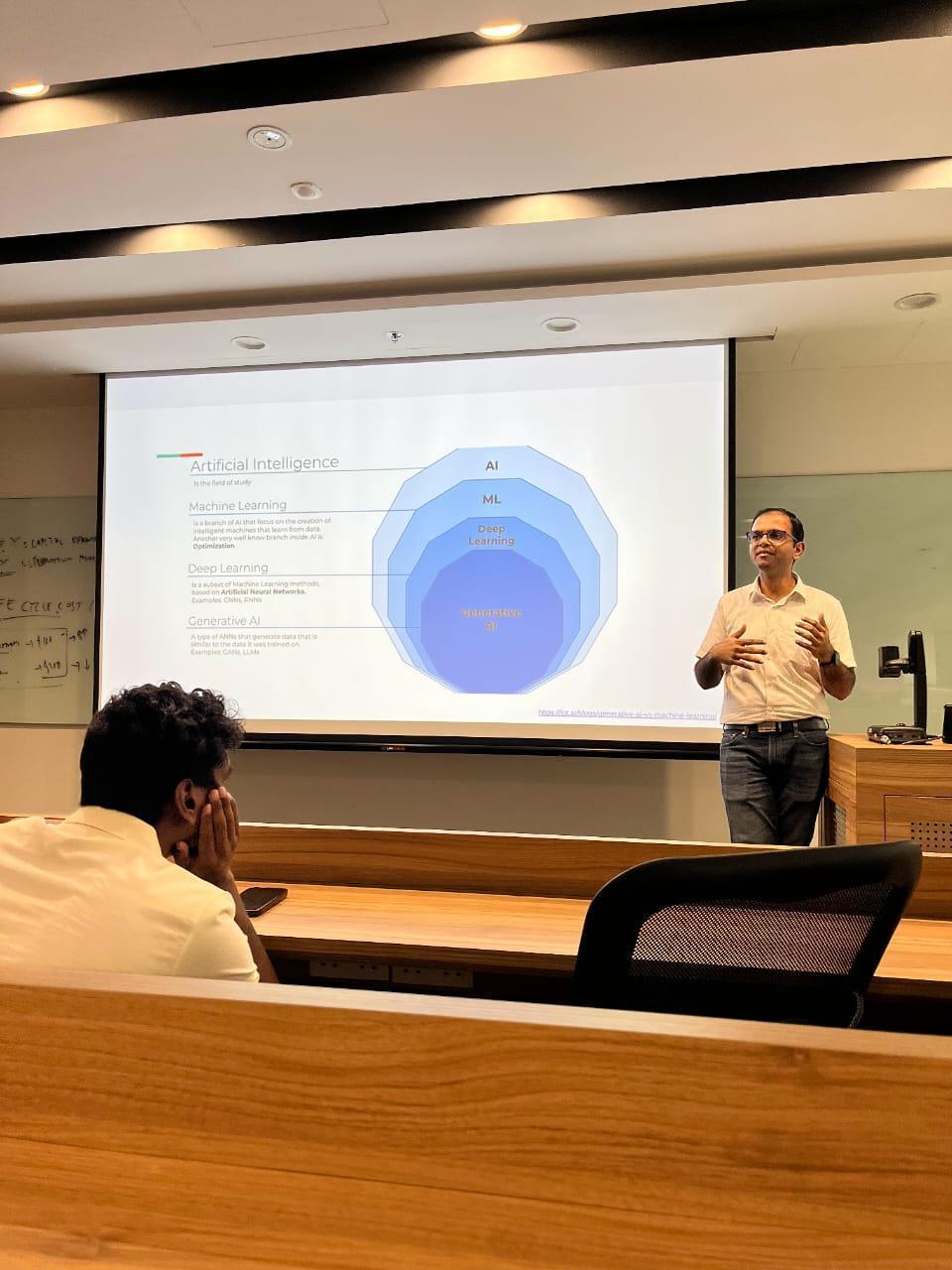
In the following session, Dr. Josey Mathew presented “Demystifying AI”, giving students a clear understanding of Artificial Intelligence—from Machine Learning and Deep Learning to Generative and Agentic AI. He explained how large-scale data and computational advancements drive intelligent behaviour and how AI is transforming industries. The discussion also covered India’s growing AI ecosystem, including its $15 billion investment in AI infrastructure. Dr. Mathew stressed the importance of identifying real-world problems before implementing AI solutions and maintaining a balance between opportunities, risks, and ethics.
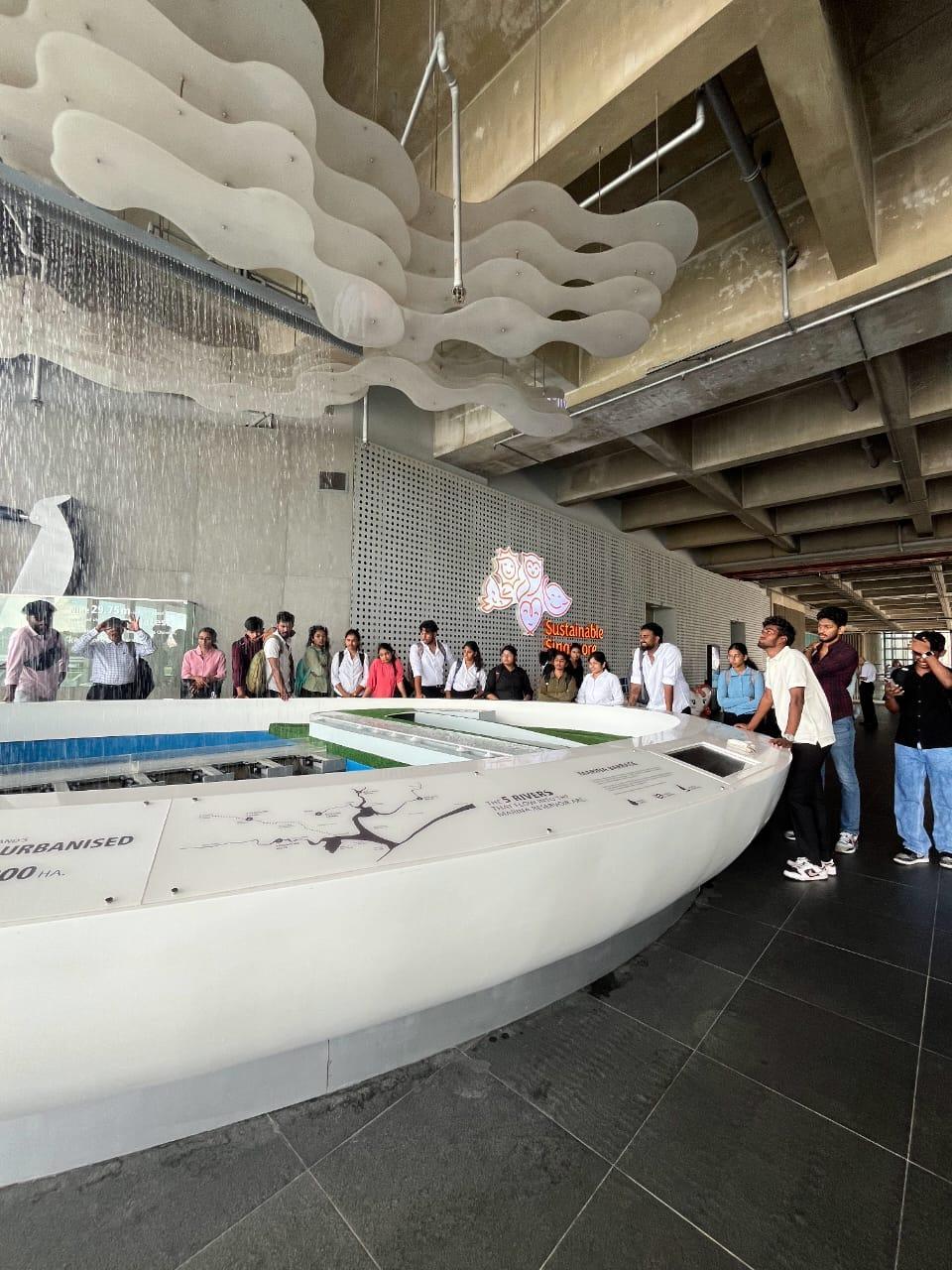
In the afternoon, students visited the Sustainable Singapore Gallery (SSG) at Marina Barrage. The visit offered an immersive experience through interactive exhibits and digital storytelling on topics like climate change, recycling, water management, and energy conservation. Students also took part in hands-on activities, including a cycling challenge, and explored innovative waste-to-art displays that illustrated Singapore’s commitment to environmental stewardship. The experience inspired students to reflect on their own environmental impact and the importance of sustainable living.
Key Learnings
- Circular economy principles help build smarter, low-waste, and resilient cities.
- Artificial Intelligence can drive innovation and solve real-world challenges when used responsibly.
- Sustainability requires both systemic innovation and individual responsibility.
Student Engagement
Although students began the day slightly late, they quickly regained focus and actively engaged in both academic sessions. The AI discussion sparked particular interest, helping students see potential career applications. At the Sustainable Singapore Gallery, students participated enthusiastically in creative and interactive sustainability activities.
Students expressed interest in adapting TUM’s food-sharing initiative — a sustainable practice that rewards reusable containers — for their own campus canteen. Such initiatives can encourage waste reduction and foster a culture of environmental responsibility and sustainable dining.




Day 4
TUM Asia – ESG Practices, Alumni Interaction, and ITAP Expo Visit
The fourth day of the international learning program at TUM Asia featured a series of engaging sessions that combined sustainability, career insights, and cutting-edge industrial innovation.
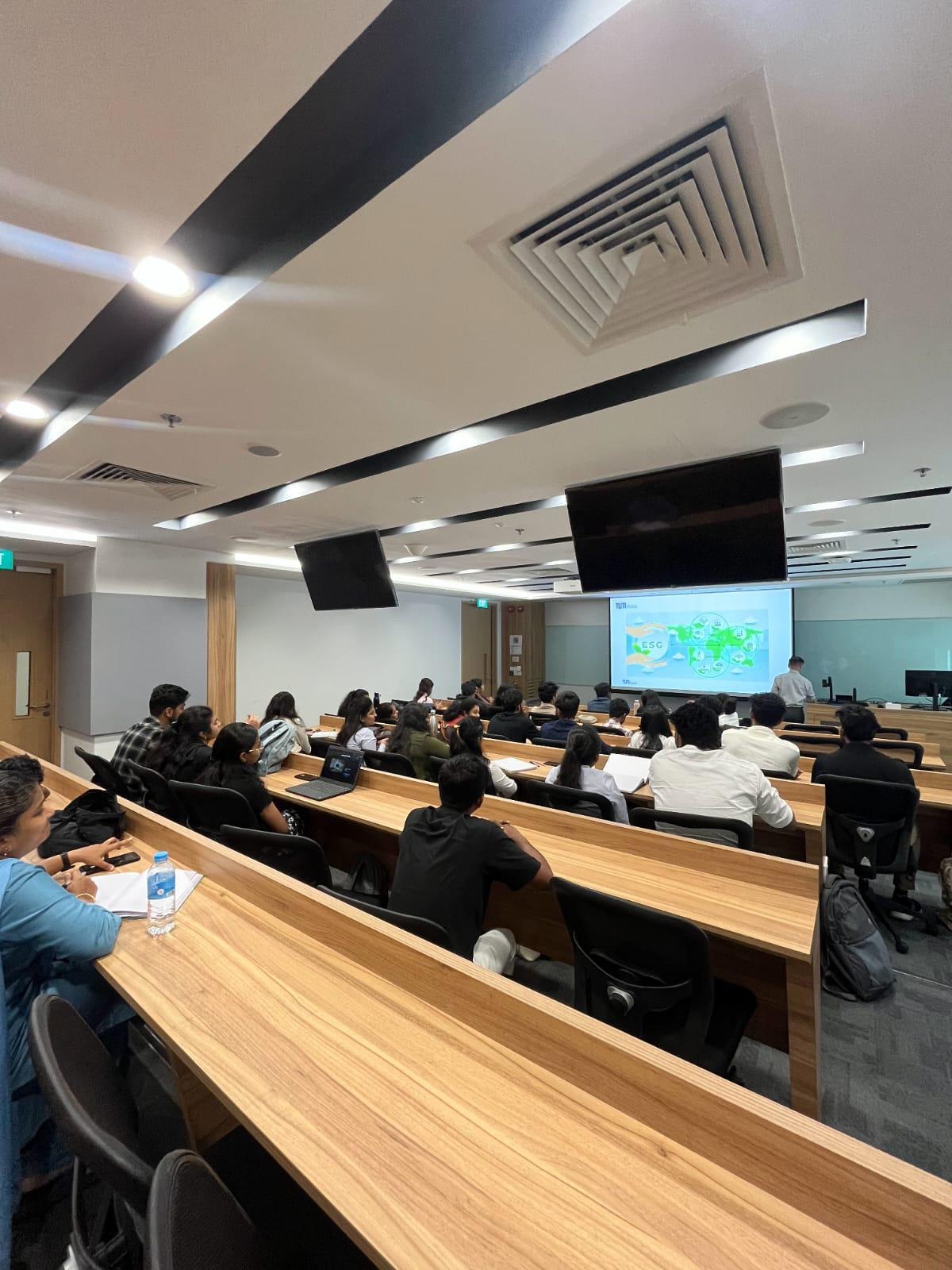
The day began with an insightful session by Mr. Spencer Kwan on Environmental, Social, and Governance (ESG) practices, where he highlighted how sustainability is transforming global industries and economies. He discussed topics such as climate change, international frameworks like the UNFCCC and Kyoto Protocol, and the role of corporate transparency in building ethical, sustainable organizations. Through real-world examples including Unilever’s ESG-driven strategies and Neste’s sustainability roadmap, Mr. Spencer emphasized that ESG is not merely compliance—it’s a strategic approach to achieving long-term business success, social equity, and environmental protection.
Following this, students attended an alumni interaction session with Mr. Soman Venugopal, Senior Vice President at Jio. He shared valuable career insights, stressing the importance of balancing academic excellence with practical skills. Expressing gratitude to faculty for their mentorship, he encouraged students to stay connected with alumni initiatives and pursue continuous professional growth.
In the afternoon, students visited the Industrial Transformation Asia-Pacific (ITAP) Expo at the Singapore Expo—Asia’s premier platform for Industry 4.0 technologies. The exhibition showcased innovations in robotics, artificial intelligence, and smart manufacturing, allowing students to witness firsthand how technology is reshaping industries. They also participated in a roundtable discussion with logistics experts, exploring real-world applications of automation, digital tracking, and sustainable transport. The experience offered valuable insights into the future of manufacturing and logistics in a digital economy.
Key Learnings
- ESG principles are essential for integrating sustainability, ethics, and profitability in modern business.
- Balancing academics with skill development enhances career readiness and success.
- AI and robotics are revolutionizing manufacturing and logistics, marking a shift toward Industry 4.0.
Student Engagement
While most students were attentive and participative, a few instances of non-cooperation and delay were noted during the morning session. These were promptly addressed by the faculty and coordinators. Despite a demanding schedule, students remained enthusiastic throughout the ITAP Expo, engaging with exhibitors and professionals.


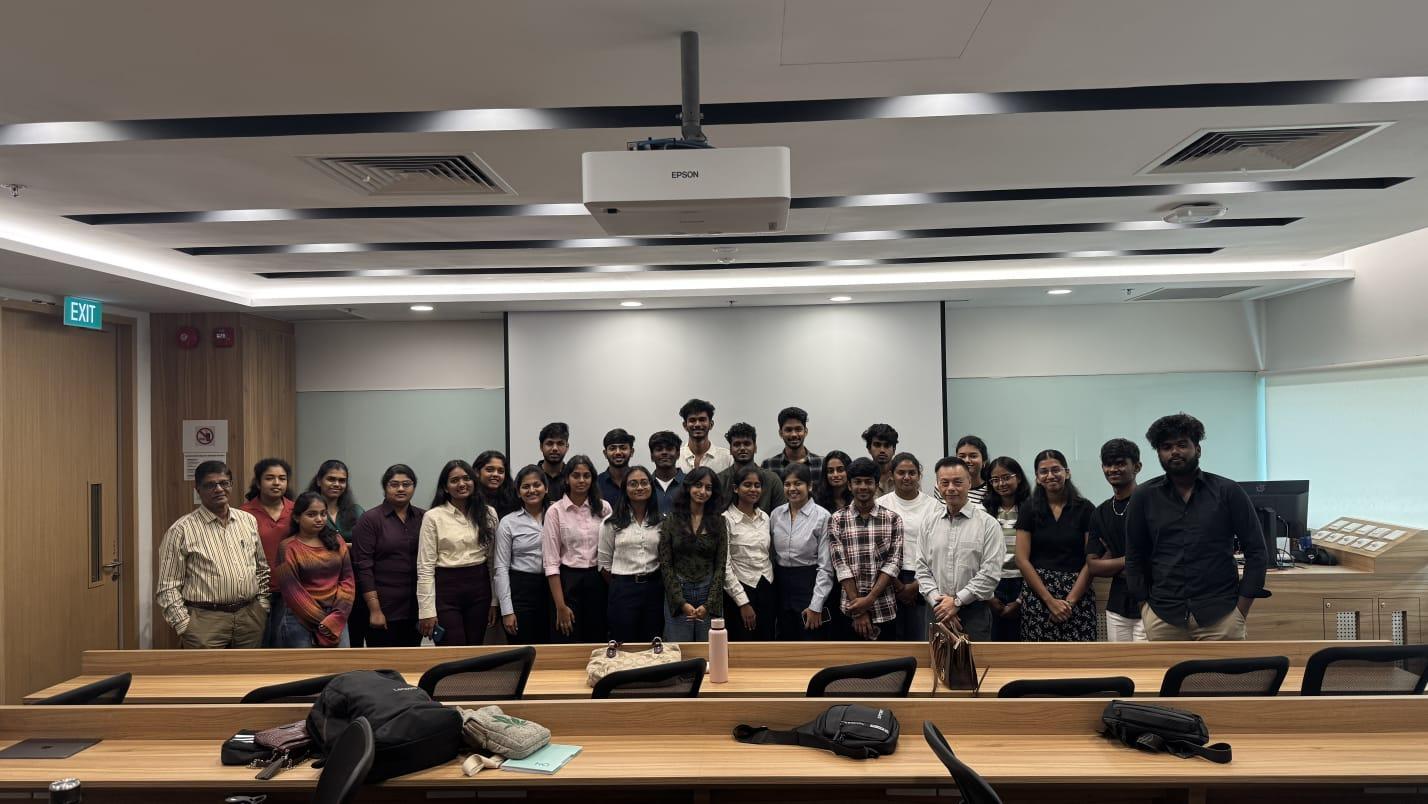

Day 5
TUM Asia – Organizational Transformation Workshop & Advanced Manufacturing Visit
The final day of the international learning program at TUM Asia featured an inspiring workshop and an immersive industrial visit, blending strategic learning with technological exploration.
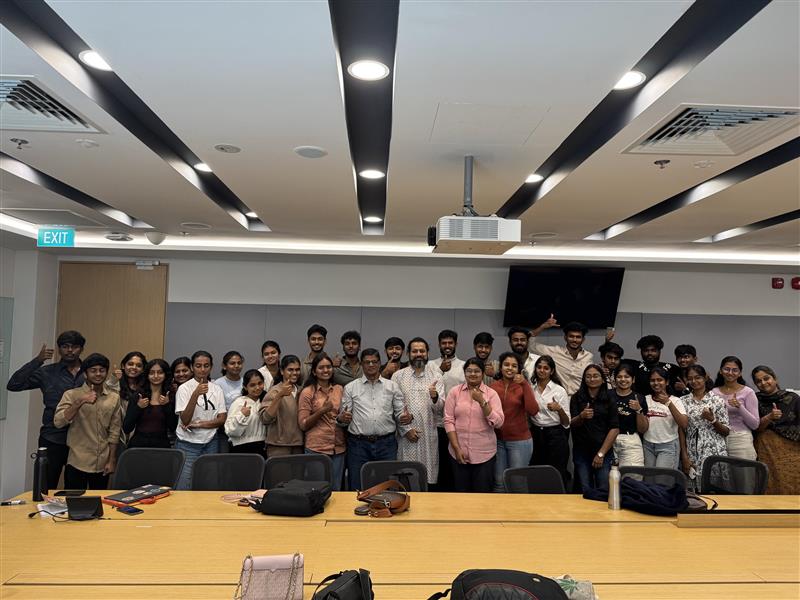
The morning session, led by Dr. Nirmal Palaparthi, focused on Organizational Transformation: Strategy, Structure, Culture, Systems, and People. Conducted in a workshop format, the session encouraged active participation as students developed vision statements and identified organizational problem statements. Dr. Nirmal appreciated two student teams for their creative solutions and leadership approach. The highly interactive format allowed participants to bridge theory with real-world problem-solving, motivating them to think as future leaders and strategic innovators. Many students regarded this as the most impactful session of the program.
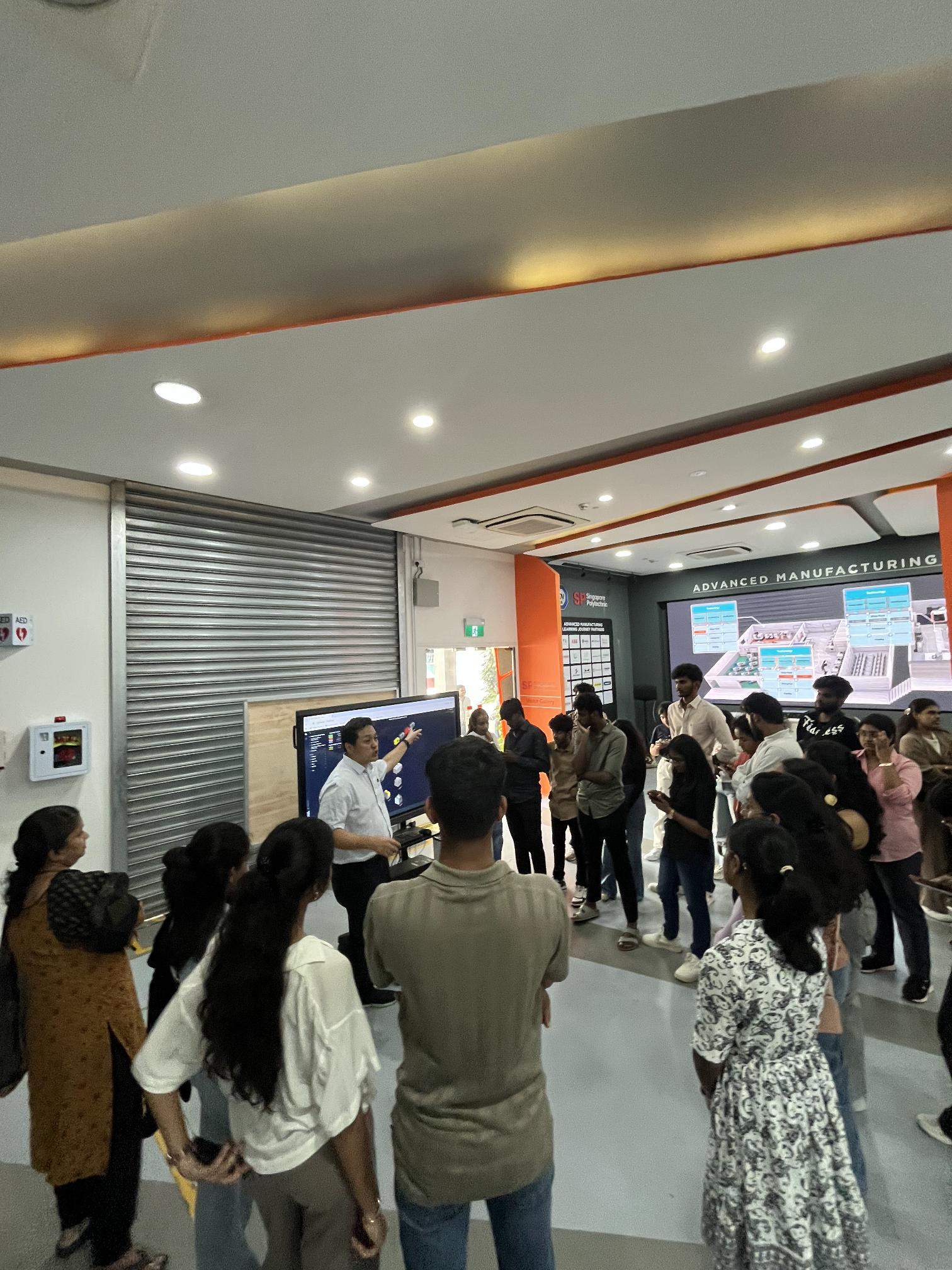
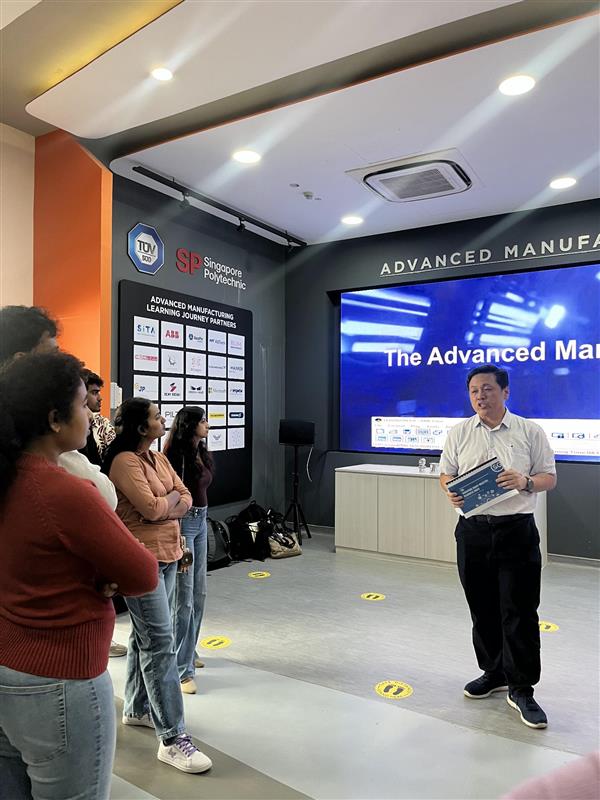
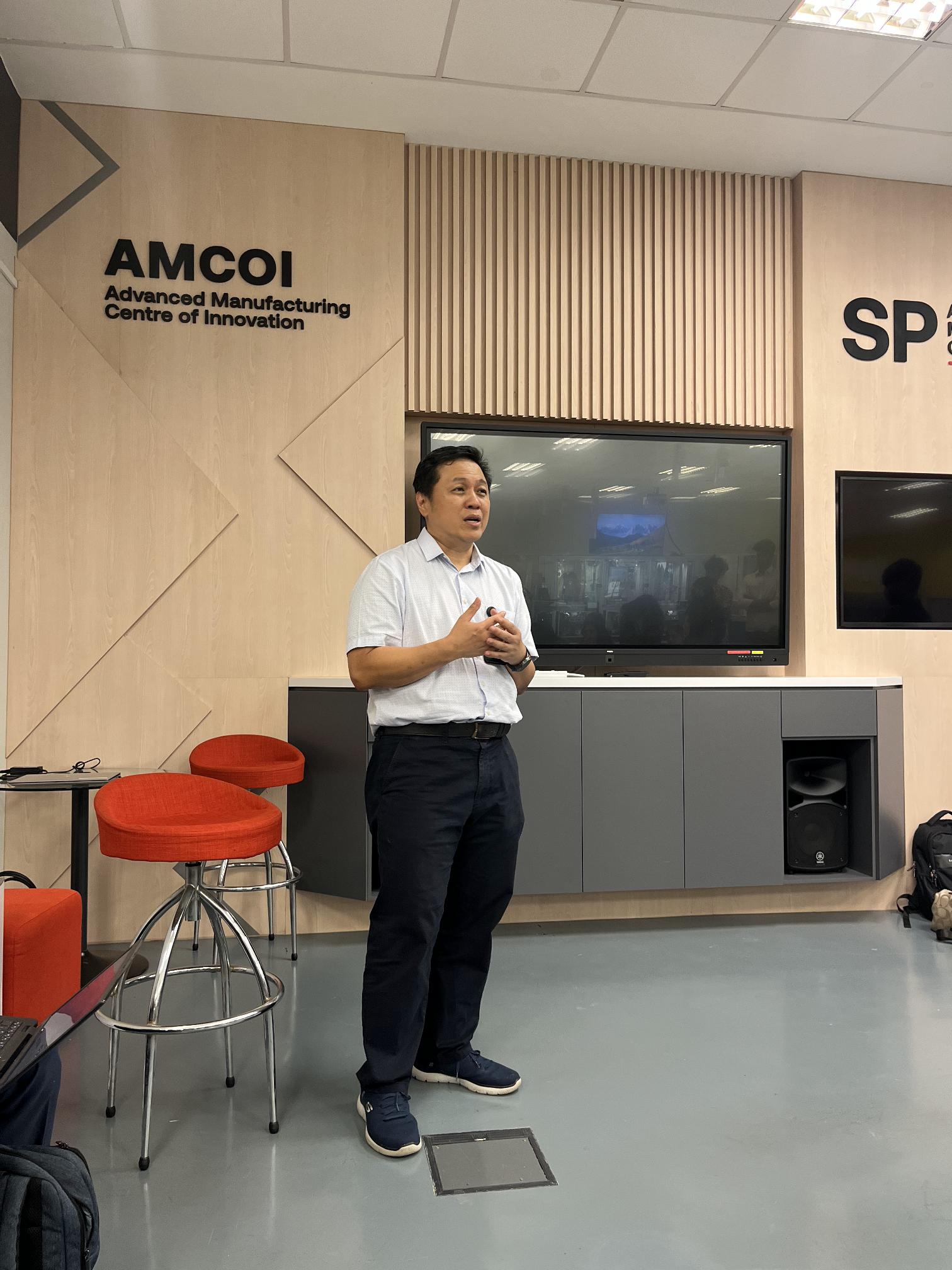
In the afternoon, students visited Singapore Polytechnic as part of the Advanced Manufacturing Learning Journey. The visit provided valuable insights into Singapore’s research-driven innovation ecosystem, showcasing how the institute collaborates with Small and Medium Enterprises (SMEs) to enhance efficiency, reduce costs, and promote technological growth. A key highlight was a hands-on demonstration with a robotic dog, offering students firsthand experience in AI and robotics. The session illustrated how academic research, technology, and industry partnerships shape the future of advanced manufacturing.
Key Learnings
- Students developed a strategic and problem-solving mindset by connecting organizational theory with real-world applications.
- Exposure to AI, robotics, and advanced manufacturing deepened their understanding of how research and innovation drive industrial transformation.
Student Engagement
By the final day, students had fully adapted to the schedule, showing improved punctuality, enthusiasm, and teamwork. The morning workshop’s participatory style kept them highly engaged, while the afternoon visit offered practical exposure to emerging technologies.